




Directorate of Extension Message
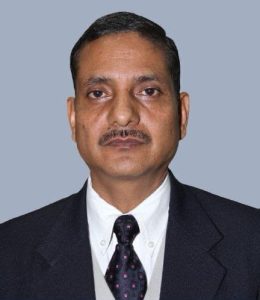
Dr. Bhagwati Prasad Bhatt
Directorate of Extension Message
The Krishi Vigyan Kendras (KVKs) of Veer Chandra Singh Garhwali Uttarakhand University of Horticulture and Forestry (VCSG UUHF), Bharsar, constitute an important institutional mechanism for translating scientific knowledge and technological innovations into tangible benefits for the farming communities of Uttarakhand. Situated in diverse hill agro-ecological situations, these KVKs serve as vital bridges between the University, research institutions and farming communities, with a shared objective of promoting sustainable, climate-resilient and remunerative agriculture and allied enterprises.
The unique geographical and ecological conditions of Uttarakhand demand location-specific technological solutions. Fragmented landholdings, difficult terrain, changing rainfall patterns, climate variability, soil degradation, human–wildlife interactions, migration, limited mechanization and inadequate market linkages pose significant challenges to hill agriculture. At the same time, the State possesses enormous potential in horticulture, forestry, agroforestry, medicinal and aromatic plants, traditional crops, nutraceuticals, beekeeping, livestock, natural-resource-based enterprises and high-value agricultural products. The KVKs of the University have a critical role in converting these challenges into opportunities through science-based interventions and farmer-centric extension approaches.
The KVKs are expected to function not merely as centres for dissemination of technologies, but as Knowledge, Innovation and Resource Centres for rural transformation. Their activities in technology assessment and refinement, frontline demonstrations, capacity building, vocational training, entrepreneurship development, production and distribution of quality planting material, soil and water management, natural farming, integrated farming systems and value addition can significantly contribute to improving farm productivity and household incomes.
I particularly envision the KVKs as dynamic platforms for “Lab to Land and Land to Lab” approaches. While scientific technologies must reach farmers in a simple, accessible and locally adaptable manner, the indigenous knowledge, innovations, experiences and practical wisdom of farmers should also inform the University's research agenda. Such two-way knowledge exchange will strengthen participatory research and ensure that technologies developed and demonstrated through the KVK system remain relevant to the diverse conditions of the Himalayan region.
The KVKs must also become catalysts for youth and women-led rural enterprises. Promotion of agri-entrepreneurship, food processing, nursery enterprises, medicinal and aromatic plant cultivation, beekeeping, mushroom production, protected cultivation, floriculture, livestock-based enterprises, agroforestry and other high-value activities can create new livelihood opportunities and contribute to reducing distress migration from rural and hill areas. Special attention should be given to women farmers, who constitute a major workforce in Uttarakhand's agricultural systems, and to rural youth who can become the next generation of technology-oriented agri-entrepreneurs.
In the context of climate change, the KVKs have an even greater responsibility. They should promote climate-resilient crops and varieties, efficient water management, soil-health restoration, agroforestry, diversified farming systems, conservation of traditional crops and sustainable management of natural resources. The KVK network can also contribute to documenting and conserving Uttarakhand's rich agrobiodiversity and indigenous knowledge while promoting their scientific validation, value addition and market-oriented utilization.
The future direction of the KVKs should be guided by stronger convergence among education, research, extension and entrepreneurship. Collaboration with line departments of the State Government, ICAR institutes, agricultural universities, Panchayati Raj institutions, farmer producer organizations, cooperatives, private enterprises and civil-society organizations will enhance the reach and impact of KVK interventions. Digital agriculture, remote advisory services, mobile-based knowledge platforms, GIS-enabled planning and data-driven extension should increasingly complement conventional extension approaches.
I am confident that the KVKs of VCSG UUHF will continue to evolve as centres of excellence for hill agriculture and rural development, reflecting the University's commitment to the people, natural resources and unique agro-ecological heritage of Uttarakhand. Through scientific excellence, participatory innovation and effective technology transfer, they can make a meaningful contribution to the vision of a prosperous, self-reliant, sustainable and climate-resilient Uttarakhand.
I extend my sincere appreciation to all KVK scientists, technical and administrative personnel, extension functionaries, collaborating institutions and, most importantly, the farming communities whose participation and innovation give purpose to the KVK system. I wish the KVKs of VCSG UUHF continued success in their endeavour to transform knowledge into opportunity and agricultural innovation into sustainable rural prosperity.
Hon’ble
Vice Chancellor & Director, Extension
Veer Chandra Singh Garhwali Uttarakhand University of Horticulture and
Forestry
Bharsar, Pauri Garhwal, Uttarakhand
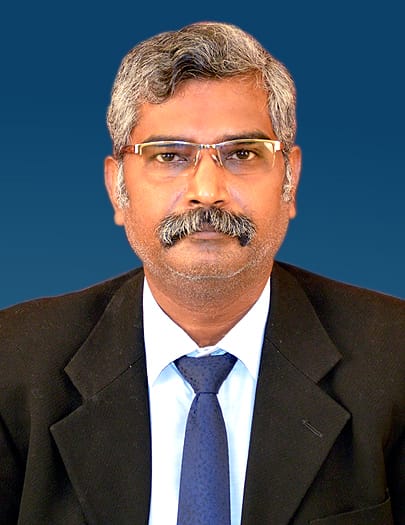
Dr. Ayyanadar Arunachalam
Directorate of Extension Message
Dr. Ayyanadar Arunachalam is a distinguished agricultural scientist, tropical ecologist and natural resource management specialist with more than three decades of experience in research, teaching, extension, scientific leadership and international cooperation. He is currently serving as Joint Director, Veer Chandra Singh Garhwali Uttarakhand University of Horticulture & Forestry, Bharsar. Prior to this, he serviced the ICAR–Central Agroforestry Research Institute (CAFRI), Jhansi as the Director and has also served as Principal Scientist in the Office of the Director General, ICAR and Assistant Director General (International Relations) in the headquarters of Indian Council of Agricultural Research (ICAR).
His research career has focused on forest ecology, soil ecology, agroforestry, biodiversity conservation, shifting agriculture, land-use dynamics, ecosystem services and sustainable natural resource management, with particular emphasis on tropical and Himalayan ecosystems. His doctoral research examined the role of detrital material, fine roots and microbial biomass in nutrient restoration and organic matter dynamics in regenerating forest ecosystems.
Dr. Arunachalam has made substantial contributions to the development and promotion of agroforestry as a pathway for livelihood enhancement, climate resilience, ecological restoration and sustainable land management. His scholarly contributions include more than 375 research papers, over 150 book chapters and more than 25 books, besides supervision of 20 Ph.D. scholars. He has also contributed significantly to major scholarly works on agroforestry systems, livelihood security and ecosystem services.
He is a Fellow of the National Academy of
Agricultural Sciences (NAAS), elected in 2016, and serves as Chief Editor of
the Indian Journal of Agroforestry. His research and institutional
leadership integrate scientific knowledge, indigenous practices, ecological
sustainability and policy-oriented approaches for advancing agroforestry and
natural-resource-based livelihoods.